Front brake replacement cost in 2026
Real 2026 prices for front brake pads, rotors and calipers, with DIY parts costs, shop labor rates, and what makes a brake job more expensive.
A front brake job in 2026 usually lands between $250 and $600 per axle for pads and rotors at an independent shop. Pads only is cheaper, around $150 to $300. Adding a caliper pushes the same job to $500 to $900. Trucks, performance cars and dealer labor all push past that.
Quick price reference
| Job | DIY parts | Independent shop | Dealer |
|---|---|---|---|
| Front pads only | $35 to $100 | $150 to $300 | $250 to $450 |
| Pads + rotors (front axle) | $90 to $250 | $300 to $600 | $450 to $900 |
| Pads + rotors + 1 caliper | $200 to $400 | $500 to $900 | $750 to $1,400 |
| Performance / European car (front axle) | $200 to $500 | $600 to $1,200 | $900 to $2,000+ |
Numbers reflect 2026 RepairPal, AutoZone and ConsumerAffairs estimates for typical sedans and SUVs.
What you are actually buying
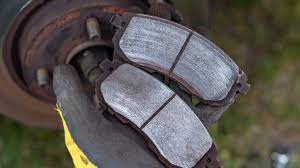
Front brakes do roughly 70% of your stopping. They wear faster than rears. A “front brake job” can mean any of three things:
- Pads only, with rotors that still have meat and aren’t grooved.
- Pads and rotors, which is what most shops sell as a brake job today.
- Pads, rotors and one or both calipers, when a caliper is sticking or leaking.
Modern rotors are cast thinner than they used to be. Most shops will not resurface them anymore. If the rotor is below the minimum thickness stamped on the hat, it gets replaced.
What pads cost, by type
Organic pads are the cheapest and the dustiest, typically $30 to $60 per axle in parts. Semi-metallic pads bite harder, last longer and tend to make more noise. Most factory pads are ceramic now: quieter, less dust, $60 to $150 per axle for quality aftermarket brands like Akebono, Bosch, Wagner or Hawk.
A 2019 Honda CR-V with semi-metallic pads from RockAuto runs about $45 in parts. The same pads at a dealer parts counter run $120. The labor to install them is the same. That gap is where you save by doing it yourself or by bringing your own parts to an independent.
Rotors
A pair of front rotors for most domestic sedans and crossovers runs $50 to $150 in parts. Coated rotors (Centric, Brembo Standard, Bosch QuietCast) are worth the extra $20 to $40 because the hat doesn’t rust as fast. On a 2020 Ford F-150 SuperCrew, decent front rotors are $150 to $250 for the pair. On a BMW 540i, $300 to $600.
Calipers
A stuck caliper means uneven pad wear, pulling on braking, or a wheel that gets dangerously hot after a short drive. Remanufactured calipers run $60 to $200 each in parts, plus a core charge. Labor adds another $80 to $150 per caliper. If both fronts need calipers, that easily adds $300 to a brake job.
Labor rates in 2026
| Shop type | Hourly rate |
|---|---|
| Chain (Midas, Pep Boys, Jiffy Lube) | $110 to $150 |
| Independent | $90 to $140 |
| Dealer | $150 to $230 |
| Mobile mechanic | $100 to $140 |
A front pad-and-rotor job is typically 1.0 to 1.5 hours of labor per axle. Trucks and anything with electric parking brakes can take longer.
How often you actually need new front pads
The 30,000 to 70,000 mile range is honest for normal driving. City drivers and commuters in heavy traffic burn through pads in 25,000 to 40,000 miles. Highway-only commuters routinely get 80,000+. Towing or hauling cuts pad life roughly in half. Mountain driving does the same.
The grinding sound everyone warns about is metal-on-metal: the pad backing plate hitting the rotor. By then you have rotor damage. The squealer tab (a thin metal finger on the pad) is the early warning, designed to make noise about 2 mm before the pad runs out.
What pushes the cost up
Domestic vs import is less important than it used to be. Half the “imports” are built in Tennessee or Ohio. What matters more is brake size and complexity:
- Electric parking brakes (most cars since 2018) need a scan tool to retract the caliper piston. A shop without the tool will charge more or refuse the job.
- Brembo and other performance calipers cost 3 to 5 times what a base caliper costs.
- One-piece pads and rotors on some EVs and PHEVs cost double.
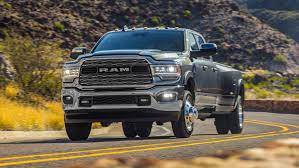
Trucks built for towing have bigger rotors and tougher pads. A 2023 RAM 2500 front brake job is $500 to $900 at a shop. A 2023 Civic is $300 to $450.
DIY notes
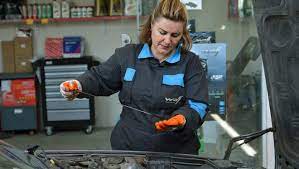
If you have a torque wrench, a C-clamp or piston tool, jack stands, and an afternoon, a front pad-and-rotor swap on most cars is a 90-minute job. The two things that bite first-timers: slider pin bolts that are seized, and rotors that won’t come off because they’ve rusted to the hub. Penetrating oil overnight handles both.
Bed the pads after install. 10 hard stops from 40 mph to 10 mph, then a cooldown without sitting on the brake. Skip this and the pads will glaze.
Sources: