Shock replacement cost in 2026
Real 2026 prices for shock absorber replacement, broken down by axle, vehicle type, parts brand, and what makes labor go up at the shop.
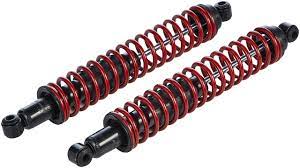
A standard shock replacement in 2026 runs $250 to $600 per axle at an independent shop, parts and labor included. Trucks and SUVs sit at the top of that range. Air or magnetic adaptive shocks (Magnetic Ride Control, AMG Ride, Range Rover air suspension) can hit $1,500 to $3,500 per axle.
Price ranges that match real shop quotes
| Vehicle type | Parts (pair) | Installed (pair) |
|---|---|---|
| Compact sedan (Civic, Corolla) | $80 to $200 | $250 to $450 |
| Mid-size SUV (CR-V, Rogue, Equinox) | $120 to $280 | $350 to $600 |
| Half-ton truck (F-150, Silverado, Ram 1500) | $150 to $400 | $400 to $750 |
| 3/4-ton or 1-ton truck | $200 to $600 | $500 to $1,000 |
| Air suspension (Range Rover, Q7, Navigator) | $600 to $1,800 | $1,200 to $3,500 |
Most cars have shocks at the rear and strut assemblies at the front. “Shocks” gets used loosely for both. A strut job costs more because the spring has to come off.
How to tell shocks are actually worn
A 5-year-old set of shocks rarely needs replacing. A 10-year-old set on a 100,000-mile truck usually does. Honest symptoms:
- Bounce test fails. Push down hard on a corner of the car. It should settle in one or two bounces. Three or more means that shock is done.
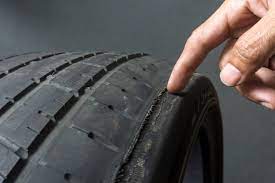
- Cupping or scalloping on the tire tread. The tire isn’t staying flat on the road, so contact patches wear unevenly.
- Nose-dive on hard braking that feels worse than it used to.
- Excess body roll in corners on roads you used to take fine.
- Visible oil streaks down the shock body. That is a blown seal.
A rough ride alone isn’t a reliable sign. Tires, bushings, or just road quality cause that more often than shocks do.
Parts brands and what to actually buy
KYB, Monroe and Bilstein cover most cars at the $60 to $180 per shock range. Bilstein B6 and B8 cost more (around $120 to $250 each) but tend to last longer and feel tighter. Rancho and Fox cost more again on trucks but are built for off-road and load-carrying use.
Cheap shocks ($30 each, no-name brand) usually fail in 20,000 miles. Skip them. The cost difference to a name brand is small once labor is in the bill.
Why fronts cost more than rears
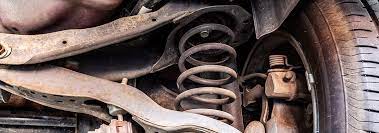
Front strut assemblies have the spring, the strut mount, the upper bearing, sometimes the sway bar link, and they sit behind the wheel. To replace a strut, the spring has to be compressed off. Buying a loaded or quick-strut (Monroe and KYB sell these) skips the spring compressor step. Loaded struts cost more in parts, $150 to $300 each, but cut labor roughly in half.
Rear shocks on most cars are two bolts and a 30-minute job. That’s why a rear pair on a Camry might cost $300 installed and a front pair on the same car runs $600.
Labor
Independent shops run $90 to $140 an hour in 2026. Dealers run $150 to $230. A pair of rear shocks is typically 1 hour of labor. A pair of front struts is 2 to 3 hours, sometimes more on cars where the spring or strut tower is awkward.
If the shop quotes you 4+ hours for a strut pair, ask why. Sometimes it’s legitimate (cars with the upper strut mount inside the fender) and sometimes it’s padding.
When to do all four
Most shops sell shocks in pairs (both fronts or both rears). Doing all four at once costs more but matches ride height and damping front-to-back. It also avoids a return visit in 6 months when the other pair fails.
On a truck with 90,000 miles, replacing all four shocks at once is the right call. On a 5-year-old commuter car with one blown shock from a pothole, just do the pair on that axle.
Driving with bad shocks
You can drive on bad shocks. You should not for long. Stopping distance increases, tires wear unevenly and need replacement sooner, and other suspension parts (control arm bushings, sway bar links, tie rod ends) take more abuse. The bill for one bad shock now is smaller than the bill for shocks plus front tires plus a control arm in 6 months.
DIY notes
A rear shock swap on most cars is a 1-hour job with hand tools and a floor jack. A front strut swap needs a spring compressor (or loaded struts), and you almost always want an alignment after, which adds $80 to $150. Skipping alignment burns through new tires fast.
Sources: