How to bleed air from your cooling system
Step-by-step guide to bleeding air from a car cooling system using either bleed screws or a vacuum fill tool, plus when air-in-coolant becomes a head gasket problem.
Bleeding air out of a cooling system means running the engine while opening either the system’s bleed screw or the radiator/expansion tank cap until liquid comes out without bubbles. On most cars this takes 20 to 30 minutes. With a vacuum fill tool (Airlift, UView), it takes 2 to 5 minutes and skips the rev-and-wait routine entirely.
Do this after any cooling system work: coolant flush, hose replacement, water pump, thermostat, radiator, or head gasket job. An engine run with air pockets in the system will overheat, even if the gauge reads normal for a few minutes.
Why air in the cooling system is a problem
Coolant moves heat from the engine to the radiator. Air doesn’t. An air pocket in the head, near a thermostat, or in a heater core stops circulation locally and creates a hot spot. Hot spots warp aluminum heads (very common on Subaru, Honda K-series, GM 3.6L V6), crack cast iron, or pop a head gasket.
The temperature gauge measures coolant temperature where the sensor sits. If the sensor is sitting in an air pocket, the gauge can read normal while the engine is overheating somewhere else. By the time the gauge moves, the damage is done.
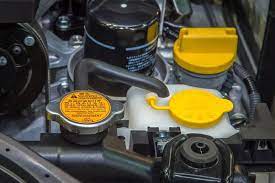
What you need
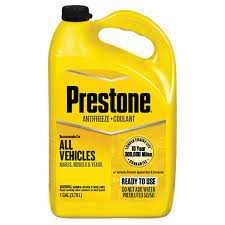
- Correct coolant for the vehicle (check the cap or the owner’s manual; mixing OAT, HOAT, and IAT coolants causes gel and corrosion)
- Distilled water if you’re mixing your own 50/50
- Funnel (a no-spill spill-free funnel like Lisle 24610 makes this 10x easier)
- Floor jack and stands (optional; helpful)
- A second person (helps, not required)
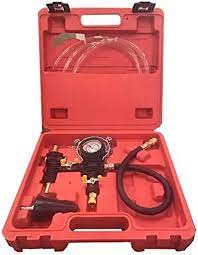
- Vacuum fill tool with shop air (optional, fastest method)
Method 1: Manual bleed with the radiator or expansion tank open
Most cars have either a radiator cap (older) or a pressurized expansion tank (most cars 2005+). The principle is the same: fill cold, run the engine, let air burp out as the thermostat opens.
- Park nose-up. Drive the front wheels onto ramps or jack the front 4 to 6 inches higher than the rear. This makes the highest point of the cooling system the fill point.
- Fill the system slowly through the radiator cap (engine cold) or expansion tank, all the way to the top of the neck. Use a no-spill funnel if you have one, locked into the fill neck.
- Open any bleed screws the manufacturer fitted. Volvos, BMWs, Volkswagens, Audis, and Subarus all have them, usually on the upper radiator hose or thermostat housing. Crack them open until coolant flows out, then close. Some BMW models have a specific bleed procedure you should look up.
- Set heater to max heat, blower on high. This opens the heater control valve so coolant flows through the heater core.
- Start the engine. Let it idle with the cap or funnel open. The coolant level will drop as the system fills voids; keep topping up.
- Bring it up to operating temp. This is the key step. The thermostat doesn’t open until coolant reaches around 180 to 195 F. Once it opens, coolant rushes through the radiator, and trapped air burps out the top. You may see bubbles for several minutes.
- Squeeze the upper radiator hose a few times (carefully; it’s hot) to push trapped air toward the fill point.
- Watch for steady coolant level. Once the level stops dropping and bubbles stop coming up, the system is bled.
- Cap the system, let it cool fully, then check the expansion tank. Top up to the cold line.
- Test drive, watching the temperature gauge. Check level again the next morning.
This whole process takes 20 to 40 minutes for most cars. On a Honda V6 or a Subaru boxer engine, plan on longer.
Method 2: Vacuum fill tool (faster, cleaner)
A vacuum fill tool ($60 to $120 for an Airlift, UView, Mityvac, or OEMTOOLS kit) hooks to shop air, pulls the cooling system down to about 25 inHg of vacuum, then opens a hose into your fresh coolant jug. The system sucks coolant in and fills completely with no air pockets.
- Drain old coolant if you haven’t already.
- Hook the vacuum tool to the radiator or expansion tank fill neck.
- Connect to shop air, pull vacuum to 25 inHg, close the valve.
- Watch the gauge for 5 minutes. If it holds vacuum, the system has no leaks. If it drops, find the leak before continuing.
- Open the coolant line and let the system suck in coolant.
- Top off the expansion tank, drive normally.
You need an air compressor with at least 5 CFM at 90 psi for this. A pancake compressor will struggle. A 20-gallon shop compressor works fine.
When bleeding doesn’t fix the problem
If you bleed the system, drive 20 miles, and the expansion tank is empty or pressurized cold the next morning, the problem isn’t trapped air. Likely causes:
- Head gasket leak. Combustion gases push coolant out of the system. A block test or a chemical sniffer at the radiator cap will confirm. Block test kits cost $40 at AutoZone.
- External leak. Look for white crust on the radiator, hoses, water pump weep hole, or the floor in the morning.
- Bad radiator cap. A cap that won’t hold 13 to 16 psi lets coolant boil at lower temps and pushes vapor out the overflow.
- Heater control valve stuck closed. Heater stays cold, air pocket lives in the heater core.
If after a full bleed your car still overheats or the heater blows cold, stop driving it and diagnose. Driving an overheating engine to “see if it gets better” turns a $200 hose job into a $4,000 engine.
Coolant safety notes
Coolant is sweet and lethal to pets and small kids. Clean spills immediately. Don’t dump used coolant down the drain; most auto parts stores take it back for free recycling.
The “lifetime” coolants Toyota, GM and Honda spec usually need a change at 100,000 to 150,000 miles or 10 years, whichever comes first. The “lifetime” wording refers to the bottle, not the system.