Fixing AMP Research PowerStep problems
Diagnose and fix AMP Research PowerStep issues including stuck steps, slow deployment, no LED lights, and OBD module faults that disable the steps.
Most AMP Research PowerStep failures trace to one of four things: dirt and ice jamming the swing arm, a corroded OBDII module connection in the cab, a failed motor, or a controller that has lost its ground. Before assuming the motor is bad, pull the step from underneath the truck, hose the linkages, dry them, spray the pivot points with white lithium grease, then check the OBDII plug behind the kick panel for water damage.
A working PowerStep deploys in under 1 second when the door opens and retracts in under 1 second when it closes. If yours is slow, hesitant, or silent, work the list below in order.
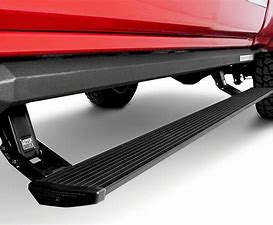
Quick symptom guide
| Symptom | Most likely cause |
|---|---|
| Step doesn’t move, no LED light | OBDII module unplugged or controller dead |
| Step moves but slowly or with grinding | Debris in pivot, ice, dry bearings |
| Step deploys but won’t retract | Spring or stopper failure on swing arm |
| Step works on one side only | Bad motor or wiring on the failed side |
| Loud clunk on deployment | Motor over-torquing into a damaged stopper |
| Step retracts too far and gets stuck up | Failed swing arm stopper |
| Burning smell from underneath | Motor pulling stall current, internal damage |
Step 1: Clean the mechanism
Tools: garden hose, stiff brush, white lithium grease spray ($8), penetrating oil.
PowerSteps live in the worst environment on the truck. Road salt, mud, gravel, slush and gravel all collect at the swing arm pivots. The plastic-coated linkages corrode underneath the coating, and the joint stiffens until the motor either struggles or stalls.
- Spray every visible pivot with penetrating oil. Let it sit 10 minutes.
- Hose out mud and grit with the truck running and door open so the steps cycle.
- Brush off remaining gunk with a stiff brush.
- Spray white lithium grease into the pivot joints, then cycle the step a dozen times to work it in.
A monthly cleaning in winter or anywhere they salt the roads keeps PowerSteps alive for years. Skipping it kills them in 2 to 3 seasons.
Step 2: Check the OBDII module connection
The PowerStep wiring harness runs from the swing arm motors up to a small module that taps into the truck’s OBDII diagnostic port (under the dash on the driver’s side). On some installs, the module is hidden behind the kick panel.
A loose, water-damaged, or partially unplugged OBDII module is the number-one electrical cause of failure. Symptoms: no LED on the controller, step doesn’t react when door opens, intermittent behavior.
- Locate the OBDII module (follow the harness from the motors up into the cab).
- Unplug from the OBDII port, check pins for green corrosion or moisture.
- Clean with electrical contact cleaner.
- Reseat firmly. The connector should click.
- Re-test.

Step 3: Check the controller and grounds
The PowerStep controller sits on the truck frame, usually near the driver’s side rocker. It has:
- 12V positive feed (red)
- Ground (black, bolted to frame)
- Signal lead from the OBDII module
- Motor leads to each step
A bad frame ground is responsible for a lot of “controller is dead” complaints. Pull the ground bolt, sand the frame paint off underneath, dielectric grease, bolt it back tight.
The 12V feed has an inline fuse (usually 20A or 30A). If it’s blown, something downstream is shorted; replace it and watch whether it blows immediately. If it does, you have a short in the motor harness or a seized motor pulling stall current.
Step 4: Test the motor
If the motors are mechanically free, the OBDII module is plugged in, and the ground and 12V feed check good, but the step still won’t move, the motor itself may be done.
A working PowerStep motor draws about 3 to 5 amps under normal load. A seized or worn motor pulls 15+ amps stall current and pops the fuse. A clicking sound with no movement is the classic stall signature.
Replacement motors run $80 to $150 each (sold by AMP Research direct, RealTruck, or Auto Accessories Garage). The motor swap is a 30-minute job per side. Lift the truck, drop the step assembly, unbolt the motor, swap.
Step 5: Swing arm stopper failure
If the step retracts too far and gets stuck up under the rocker panel, the swing arm stopper has either broken or been pushed past its limit. Symptoms: a thud on retraction, then no further movement.
Aftermarket replacement stoppers cost $20 to $40 and install with a screwdriver and a few minutes per side. AMP also sells the entire swing arm assembly for $200 to $400 if the arm itself is bent.
Common scenarios and quick fixes
“My PowerStep stopped working in winter.” Ice locked the pivot. Spray with hot water, let it move, dry, lithium grease. Don’t pry it.
“One side deploys and the other doesn’t.” Bad motor or wiring on the dead side. Swap the connectors at the controller. If the failure moves with the connector, the controller is bad. If it stays with the side, the motor or wiring on that side is the problem.
“LED light works but step doesn’t move.” Controller is getting the signal but can’t run the motor. Probably a seized motor or a broken wire to one side.
“Step deploys fine but stays out when door closes.” Door switch signal not reaching the controller. Check the OBDII module connection.
“After hitting a curb, my step bent.” Order a replacement swing arm. They’re not user-repairable once kinked.
Warranty
AMP Research offers a lifetime warranty on the structural parts (steps, arms) and a 5-year warranty on the motor and electronics for the original purchaser. Keep the original receipt. Warranty claims are processed through dealers and RealTruck.
A common point of friction: the warranty doesn’t cover damage from neglect (salt buildup, debris). Documented regular cleaning helps your case.
When to give up and replace the whole unit
A full pair of PowerSteps for a 2024 F-150 SuperCrew runs $1,500 to $2,200 new. If you’ve replaced both motors, both stoppers, the controller, and the OBDII module and the system is still flaky, the harness or the arm pivots are likely worn beyond cleaning. A full swap puts you back to “like new” and the failed components have resale value on truck forums.
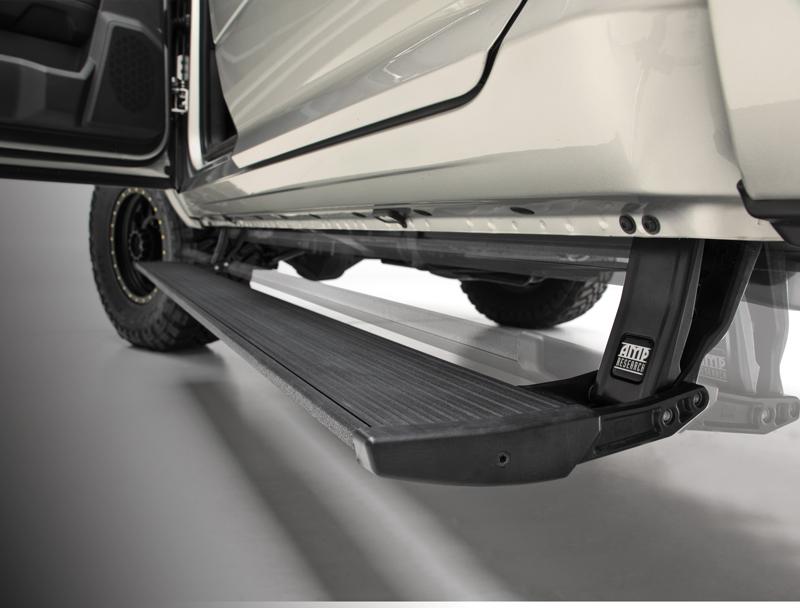
Are AMP PowerSteps worth it on a new truck?
Most failures come from neglect, not bad design. Owners who hose and grease them once a season report 8 to 10 years of trouble-free use. Owners who let mud pack solid have them fail in 2 to 3 years. They are a maintenance item, more than most aftermarket truck accessories.