Fixing the Ford Explorer 'Starting System Fault' message
Diagnose the Ford Explorer Starting System Fault warning, with battery tests, starter checks, key fob issues, and the PATS anti-theft glitch.
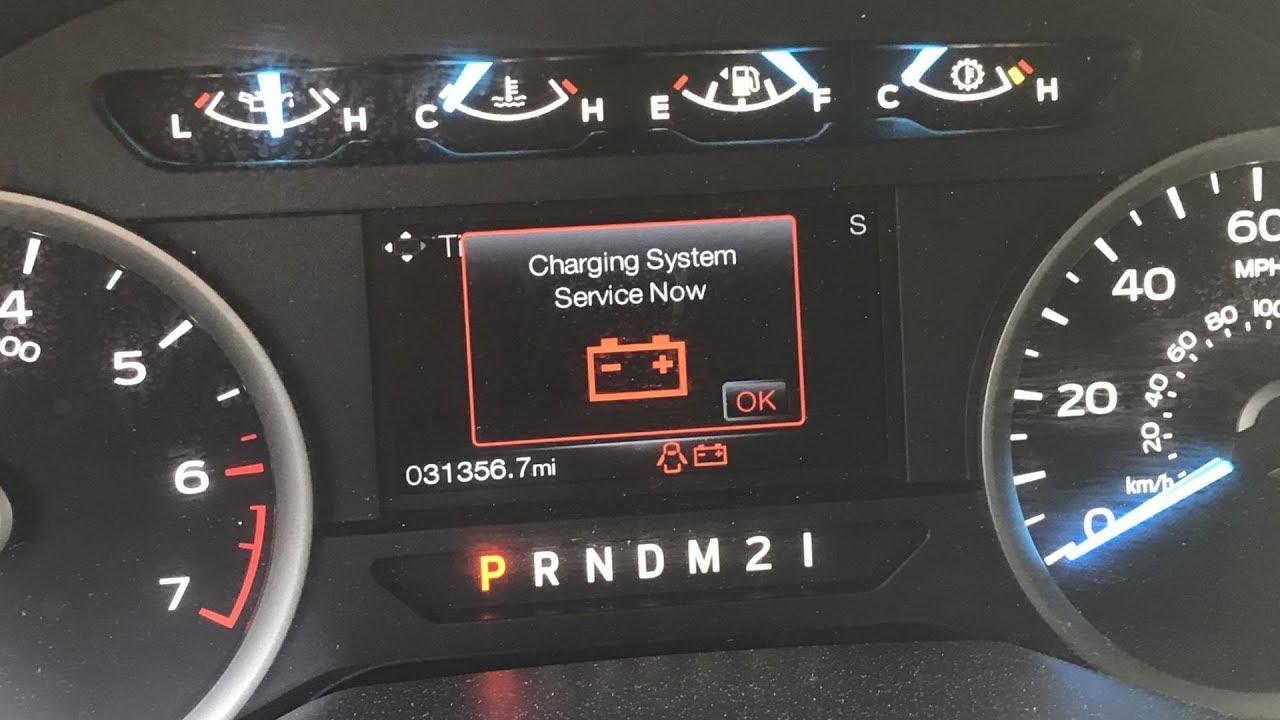
The “Starting System Fault” message on Ford Explorers (2011-2026) almost always traces to one of these: weak or dying 12V battery (about half of all cases), corroded battery terminals or ground straps, a failing starter, a dead key fob coin battery, or a PATS anti-theft system handshake failure. Start with a voltage test on the battery before tearing into anything else.
A healthy battery shows 12.6V resting and over 9.6V during cranking. Below either of those numbers, the starter system can’t reliably engage and the truck logs the fault.
Quick diagnostic order
- Check key fob battery. Replace if older than 2 years. Try the spare fob.
- Voltage-test the 12V battery (multimeter, $20).
- Inspect battery terminals for corrosion.
- Listen for the starter on a crank attempt. Click only, slow crank, or silence.
- Pull codes with an OBD-II scanner.
- Check the alternator output if the battery keeps dying.
Most Explorer starting faults are fixed within steps 1 through 4.
The key fob coin battery (do this first)
A weak key fob can trigger Starting System Fault even when the truck’s battery is healthy. The Explorer’s PATS (Passive Anti-Theft System) reads the fob through the steering column antenna. A dim fob signal causes intermittent handshake failure, and the truck refuses to start with the fault warning.
The fob uses a CR2032 coin battery, $3 at any drug store. Replace every 2 to 3 years. If you have a spare fob, try starting with it.
If neither fob works, look at the PATS system. Sometimes a re-program at a dealer ($75 to $150) is needed.
Battery testing
You need a multimeter. Set to DC volts.
| Reading | What it means |
|---|---|
| 12.6V+ resting | Battery is healthy |
| 12.4V to 12.6V | OK but could be better |
| 12.0V to 12.4V | Marginal, will struggle |
| Under 12.0V | Failing, replace |
| Drops under 9.6V cranking | Battery can’t hold load |
Most Explorers use a Group 96R (newer trucks) or Group 65 (older 4.6L V8) battery. A quality AGM replacement (DieHard Platinum, Optima YellowTop, Interstate MTP-94R) runs $200 to $300 installed. Expect 4 to 6 years of life on average, less in hot climates.
Free battery testing is available at AutoZone, Advance Auto, NAPA and most independent shops. They’ll print a load test report.
Battery terminals and grounds
Corroded terminals act like a partially disconnected battery. The truck cranks slowly, intermittently, or not at all.
- White or green fluffy buildup on the terminals: corrosion.
- Loose nut on the terminal clamp: needs tightening.
- Black ground strap from battery to engine block or frame: check for clean metal contact.
Cleaning:
- Disconnect negative cable first, then positive.
- Mix baking soda with water, scrub terminals and posts with a wire brush.
- Rinse with clean water, dry.
- Apply terminal grease or felt protector washers.
- Reconnect positive first, then negative. Torque to 60 in-lb.
Loose body and engine ground straps cause weird intermittent issues. Look behind the battery box and under the firewall for any black wires bolted to the frame or body. Sand the bolt area to bare metal, reinstall, and grease.
Starter motor
If the battery and terminals are good and the truck makes a single loud click or a rapid clicking when you turn the key, the starter is the suspect.
- Single loud click: starter solenoid engaging but motor not turning.
- Rapid clicking: low voltage or bad solenoid.
- Silence: starter dead or no power to the solenoid.
Starter replacement on a 2011+ Explorer 3.5L is moderate: 2 to 4 hours of labor and $250 to $500 in parts. Some bays require removing intake parts to access the starter.
The hammer trick (gently tapping the starter while someone tries the key) sometimes wakes a dying starter long enough for a final start. Don’t rely on it; replace the starter at the next opportunity.
Alternator
A failing alternator drains the battery faster than it charges it. Signs: warning light, voltage gauge dropping during operation, lights dimming at idle, accessories flickering.
Test: engine running at 1,500 rpm, multimeter on battery terminals, should read 13.8 to 14.4V. Below 13.5V is undercharging. Above 14.7V is overcharging.
Explorer alternator replacement: $300 to $700 parts, $150 to $300 labor depending on year.
PATS anti-theft handshake failure
The PATS system reads a chip in the key fob via a ring antenna around the ignition column (older Explorers) or wirelessly (push-button start). When this handshake fails, the truck enters anti-theft lockout and may show Starting System Fault.
Resets to try:
- Use the spare fob if you have one.
- Cycle the ignition: key to RUN for 10 minutes, then off, then try to start.
- Disconnect the battery for 15 minutes to clear stored PATS errors. Reconnect and try.
If PATS persists, a dealer can re-pair the fobs using IDS or FDRS diagnostic software ($75 to $200).
Scanning for codes
If the basic fixes don’t help, plug in a scanner.
- B-codes (body): often related to anti-theft, BCM, or smart junction box.
- C-codes (chassis): ABS, traction control, sensors.
- P-codes (powertrain): engine and transmission.
- U-codes (network): module communication faults.
B1681 / B1682 are common PATS codes on Explorers. P0562 indicates low system voltage (battery or alternator). P0610 means the BCM has logged a calibration mismatch (often after a battery disconnect, clears on a drive cycle).
The reset that often clears stored faults
Once a starting fault is logged, the warning can stay until cleared even if the underlying problem is fixed. To clear:
- Disconnect the negative battery terminal.
- Press and hold the brake pedal for 30 seconds.
- Wait 15 minutes.
- Reconnect.
This is the same procedure that clears Terrain Management System faults. It also forces the BCM to reread all sensors at next startup.
When to call a shop
- Repeated Starting System Faults after battery replacement
- Burning smell from under the hood
- Smoke from the steering column area
- Truck starts after multiple attempts and then runs poorly
Repeated faults after a new battery often mean an aftermarket battery is the wrong size or the battery monitoring system (BMS) wasn’t reset. Ford’s BMS needs to be told a new battery was installed, otherwise it keeps charging the old battery’s profile and the new one wears out fast.
Quick reference
| Symptom | Most likely cause | Fix |
|---|---|---|
| Single click on crank | Starter solenoid | Replace starter |
| Rapid clicking | Low battery voltage | Charge or replace battery |
| Silence | Dead battery or bad starter circuit | Test voltage, then starter |
| Slow crank | Weak battery or bad ground | Clean grounds, test battery |
| Crank but no start | Fuel, spark, or PATS | Scan codes |
| Intermittent no-start, fob dim | Fob coin battery | Replace CR2032 |
| Recurring fault after battery swap | BMS not reset | Dealer or scan tool reset |