Measuring for a drop hitch
Measure the hitch receiver height and trailer coupler height to size a drop or rise hitch, with examples, tools and target tolerances.
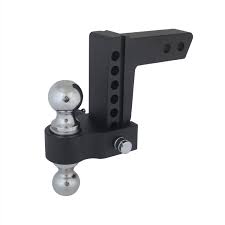
Park both vehicle and trailer on level ground with the trailer loaded. Measure from the ground to the inside top of the receiver tube (hitch height) and from the ground to the bottom of the trailer coupler (coupler height). The difference is the drop or rise you need.
If the receiver is higher than the coupler: you need a drop hitch by that exact amount. If the coupler is higher: you need a rise hitch (also sold as a “drop hitch installed upside down”). Tolerance: aim for trailer level within 1/2 inch front-to-back when hooked up and loaded.
Why this matters
A trailer that’s tilted nose-up shifts weight off the tongue and onto the rear of the trailer. Less tongue weight means more sway, especially at speed and in side wind. A trailer that’s tilted nose-down loads up the rear of the truck, lightens the front axle, hurts steering and braking, and accelerates rear tire wear on the truck.
Level trailers also brake better. Brakes work best when the trailer wheels are at their designed angle of attack. Heavily tilted trailers have one axle doing more work than the other, especially tandem-axle trailers.
What you need
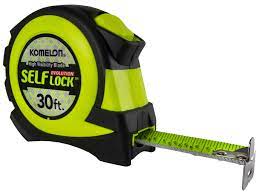
- Tape measure (25 ft is plenty)
- Flat, level ground (concrete pad, garage floor)
- Tongue jack on the trailer (so you can set the coupler height)
- The actual trailer load you’ll tow (loaded matters more than empty)
Measuring the hitch height (truck side)
- Park the truck on level ground.
- Drop the tailgate.
- Hold the tape measure vertical from the ground up to the inside top of the hitch receiver tube.
- Record the number.
A 2019 Ford F-150 SuperCrew sits with a receiver around 17 to 19 inches off the ground, depending on tire size and suspension load. A 2020 Ram 2500 4x4 sits at 22 to 24 inches. A 2017 Toyota Highlander is around 14 to 16 inches.
The number changes if you load the truck. If you tow with passengers and gear, measure with that weight in the truck. The rear suspension squat affects hitch height by 0.5 to 1.5 inches on most trucks, more on overloaded ones.
Measuring the coupler height (trailer side)
- Park the trailer on level ground. Loaded, with whatever you’re hauling.
- Use the tongue jack to set the trailer dead level. Use a small bubble level on the trailer frame to confirm.
- Measure from the ground to the bottom flat surface of the coupler (the part the ball sits in).
- Record the number.
A typical 16-foot utility trailer with a 2 inch ball coupler sits at 18 to 22 inches. A travel trailer can range from 19 to 26 inches.
Doing the math
Drop or rise needed = receiver height minus coupler height.
| Example | Receiver | Coupler | Result |
|---|---|---|---|
| F-150 with utility trailer | 18 in | 20 in | 2 in rise needed |
| Ram 2500 with travel trailer | 23 in | 19 in | 4 in drop needed |
| Tacoma with boat trailer | 16 in | 16 in | Straight ball mount, 0 drop |
| Tundra with car hauler | 21 in | 15 in | 6 in drop needed |
The drop/rise refers to the offset of the ball platform on the shank. Add the ball height (3/4 to 1.5 inches typical) and the receiver opening offset to get the net effect.
Drop hitch shank specs
Standard shank dimensions:
- Class III, IV (2 inch receiver): typical drops of 2, 4, 6, 8, 10 or 12 inches.
- Class V (2.5 inch receiver): drops of 4, 6, 8, 10, 12 or 14 inches available.
Most aftermarket ball mounts (B&W Tow & Stow, Curt Trutrack Adjustable, Gen-Y Hitch, Andersen) come in fixed or adjustable styles. Adjustable mounts ($150 to $350) cover a range like 0 to 9 inches drop, useful if you tow multiple trailers with different couplers.
Fixed mounts are cheaper ($30 to $100) and stronger pound-for-pound, but you need one for each trailer setup.
Ball size matters too
Trailer couplers come in three common ball sizes:
| Ball | Coupler diameter | Typical trailers |
|---|---|---|
| 1 7/8 in | Small utility, jet ski, ATV trailer | Up to 3,500 lb GTW |
| 2 in | Mid utility, boat, mid travel trailer | Up to 8,000 lb GTW |
| 2 5/16 in | Travel trailer, heavy car hauler | Up to 14,500 lb GTW (more with WD hitch) |
The ball and coupler must match exactly. A 2 inch ball in a 2 5/16 coupler will rattle loose. A 2 5/16 ball won’t fit a 2 inch coupler at all.
Weight distribution hitches
If you’re towing 5,000+ lb behind a half-ton truck or anything over 50% of the truck’s rated capacity, a weight-distribution hitch (Equal-i-zer, Andersen, Reese, Curt) redistributes tongue weight from the rear axle to all four axles of the truck and trailer. The WD shank counts toward your drop/rise math but the actual hitch ball sits at a fixed offset.
Set up the WD with the trailer level when loaded. Adjust spring bar tension at the dealer or per the manual; it’s not a guess.
Common mistakes
- Measuring with an empty trailer. Loaded changes things by 1 to 3 inches.
- Not measuring with passengers. A truck full of people sits lower.
- Picking by trailer brand. The drop needed depends on your specific vehicle and trailer pairing, not the brand.
- Using a flipped drop mount when a rise mount is available. Flipping a drop hitch upside down rates lower than a proper rise mount.
- Mismatching ball size. Always confirm.
Quick test once installed
Hook up the loaded trailer. Walk around. The trailer frame should be parallel to the ground or sloped 1 to 2 degrees nose-down (slight forward rake helps with brake balance and sway resistance). Nose-up is wrong. Way nose-down is wrong too.
If it’s off, change the drop/rise on the ball mount, not the trailer or the truck. Adjustable mounts make this easy.